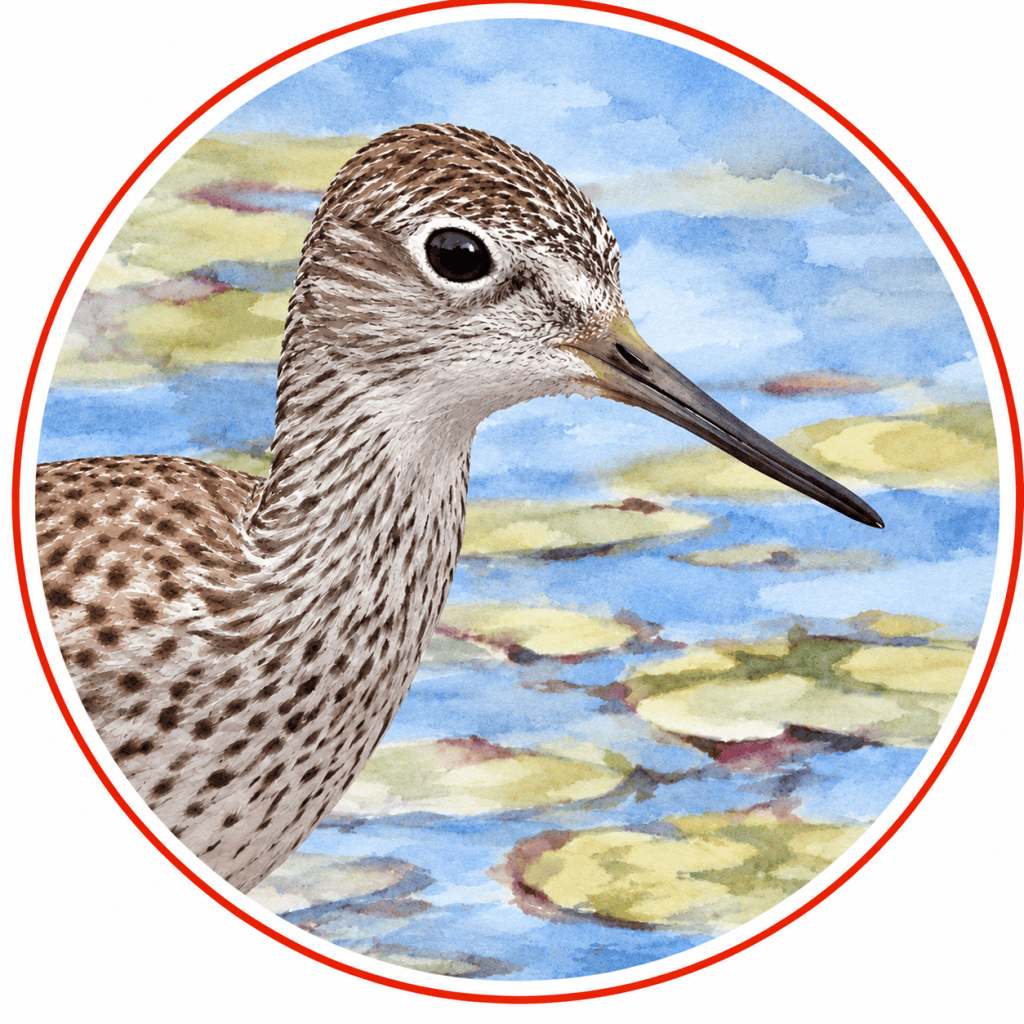
Scientific Name: Tringa flavipes
Family: Scolopacidae — Sandpipers and Allies
A graceful shorebird of North America’s wetlands, the Lesser Yellowlegs is distinguished by its slender, straight bill, bright yellow legs, and delicate proportions. Breeding in northern boreal wetlands, it migrates southward through shallow marshes and mudflats, actively hunting small aquatic invertebrates.

Identification
A slender, medium-sized shorebird with long, bright yellow legs, a relatively short, straight bill, and finely patterned gray-brown upperparts. In breeding plumage, the breast and flanks become more heavily marked with dark streaking and spotting. In flight, the plain wings and white rump extending up the back are useful identification features. Lesser Yellowlegs is especially likely to be confused with Greater Yellowlegs, but its smaller size, shorter and straighter bill, and generally more delicate proportions help separate the two.
Similar Species (Optional if Necessary)
Greater Yellowlegs is the species most likely to cause confusion. Look beyond the yellow legs and compare overall proportions: Greater Yellowlegs is larger and heavier-bodied, with a noticeably longer bill that is often slightly upturned, while Lesser Yellowlegs appears more delicate with a shorter, straighter bill. When photographing an uncertain bird, try to capture a clear side profile showing the entire bill and body; photographs that include nearby shorebirds can also provide useful size comparisons.

1/2500 sec · f/10 · ISO 6400
Natural History
Lesser Yellowlegs are active, energetic foragers, often walking quickly through shallow water while picking prey from the surface or probing into mud. They feed primarily on aquatic insects and other small invertebrates, sometimes sweeping the bill through the water as they search. During migration they gather at wetlands, flooded fields, pond edges, and mudflats, while the breeding season takes them north into the boreal forests of Canada and Alaska, where they nest on the ground near wetlands and open water.
Habitat & Distribution
Lesser Yellowlegs breed primarily in the boreal wetlands and open forests of Alaska and Canada. During migration they occur across much of North America, using shallow freshwater wetlands, flooded fields, marsh edges, mudflats, and other areas where exposed or lightly flooded substrate provides feeding opportunities. Most winter farther south, from the southern United States through Mexico, Central America, the Caribbean, and much of South America. Their dependence on a network of wetlands throughout the year makes suitable stopover habitat especially important during migration.
My Encounters
Saskatchewan
I encountered Lesser Yellowlegs along the shallow margins of the Crawford Lake area in southern Saskatchewan, where shorebirds were feeding along the exposed wetland edge during my late-summer visit. It was one of several shorebird species that drew my attention that afternoon before the distant calls of Sandhill Cranes changed the character of the day—and ultimately became the story I remembered most.
Through My Lens
A selection of photographs from my encounters with Lesser Yellowlegs in different places and seasons.

Ceres WTP, California — July 30, 2025
1/250 sec · f/10 · ISO 160

Ceres WTP, California — July 30, 2025
1/2500 sec · f/10 · ISO 6400
Explore More
Crawford Lake Area
Explore the southern Saskatchewan wetland where I encountered Lesser Yellowlegs and other migrating shorebirds.
Shorebirds
Explore other shorebirds I have encountered and photographed across wetlands, shorelines, mudflats, grasslands, and other habitats.
From Reflections of the Natural World
When the Cranes Changed the Season — A late-summer afternoon at Crawford Lake when shorebirds filled the wetland margins before the distant calls of Sandhill Cranes changed the character of the day.

