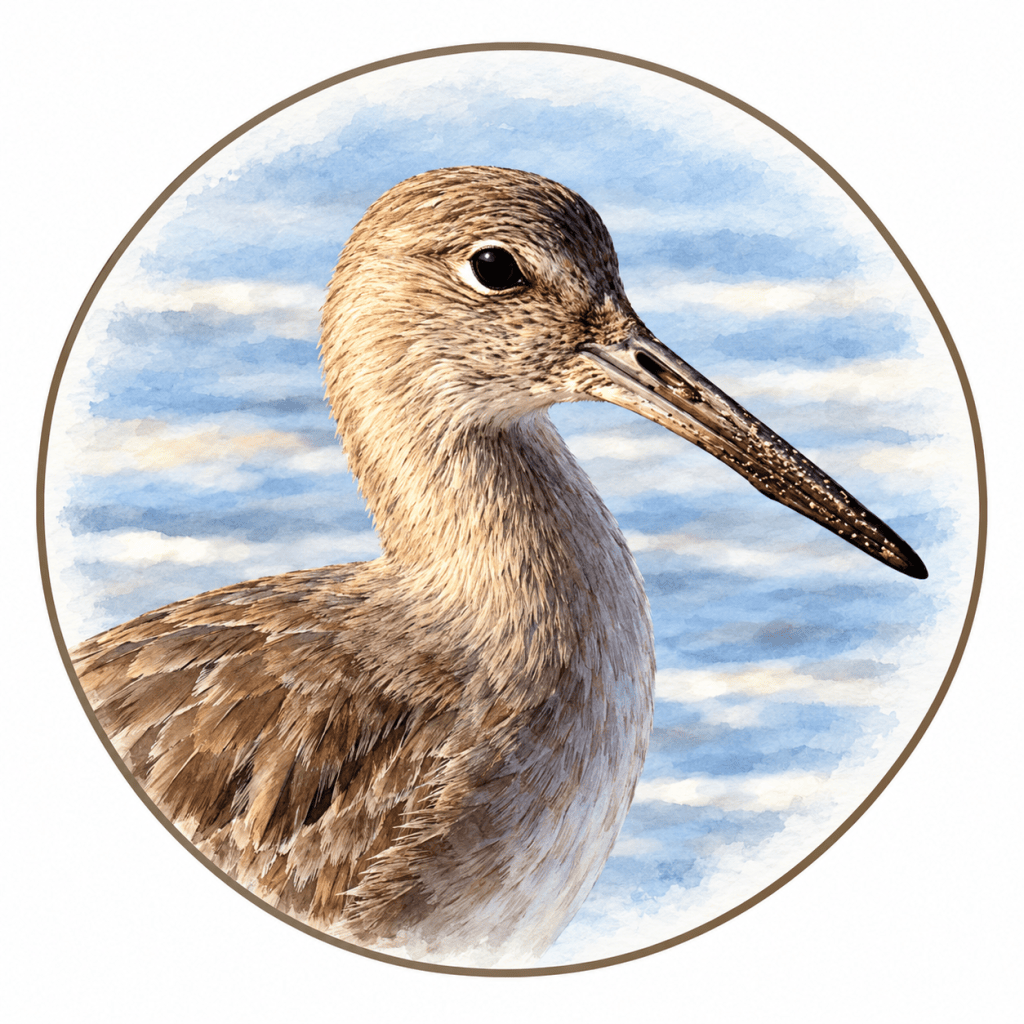
Scientific Name: Tringa semipalmata
Family: Scolopacidae — Sandpipers and Allies
A large North American shorebird of coastal and inland wetlands, the Willet is best known for its striking black-and-white wing pattern, dramatically revealed in flight. Its distinctive calls are equally memorable.

Identification
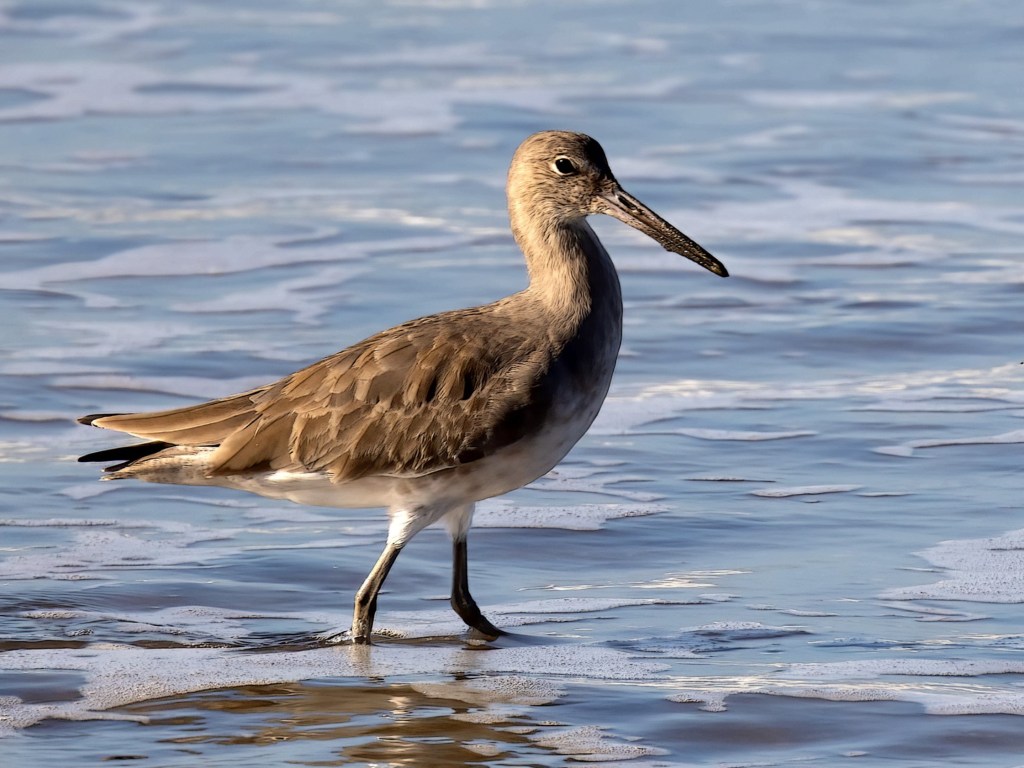
A large, sturdy shorebird with a long, straight, fairly thick bill, long legs, and gray-brown plumage that can look surprisingly plain when standing. The unmistakable field mark appears in flight: broad black-and-white wing stripes contrasting sharply with the otherwise subdued body. Western Willets tend to be larger, longer-legged, and longer-billed than Eastern Willets.
Similar Species
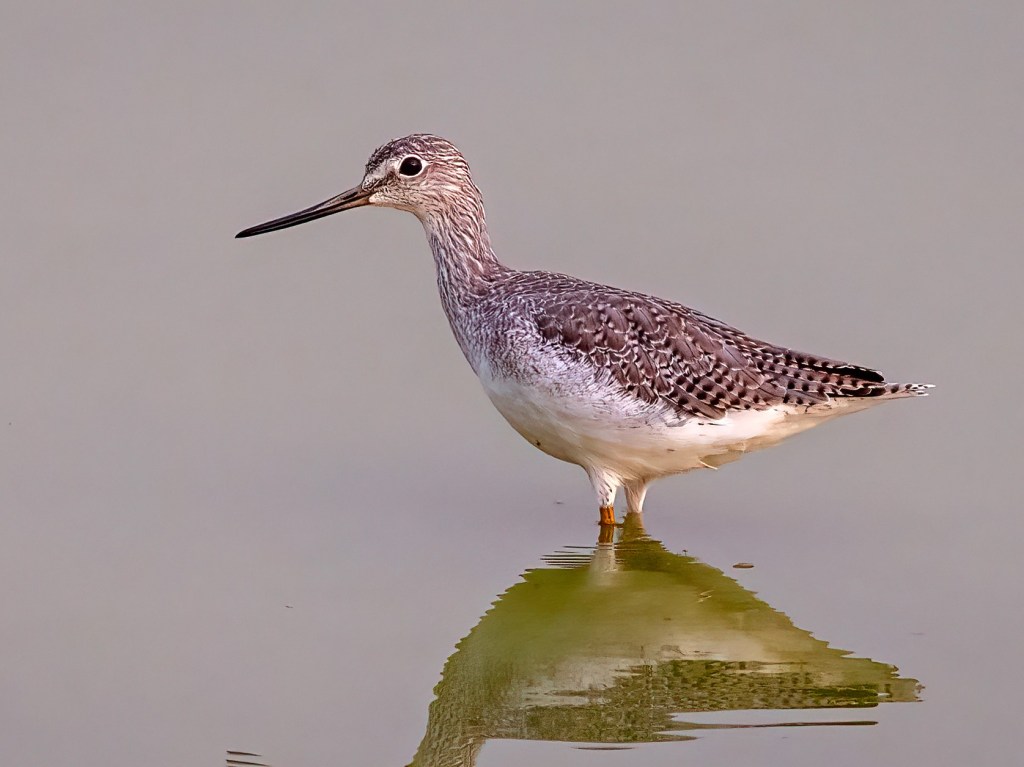
Greater Yellowlegs can overlap in size and habitat but has bright yellow legs, a somewhat upturned bill, and lacks the Willet’s bold black-and-white wing pattern. Greater Yellowlegs is also usually more active and animated while feeding. In nonbreeding plumage, a standing Willet can also invite comparison with godwits, but its straighter bill and different proportions are useful clues.
Natural History
Willets forage by walking through shallow water, mudflats, shorelines, and wet grasslands, picking prey from the surface or probing into soft substrate. Their diet includes aquatic insects, crustaceans, mollusks, worms, and other small animals. During the breeding season they become conspicuous and vocal, defending territories and nesting on the ground in grasses or marsh vegetation.
Habitat & Distribution
Two broadly separated breeding populations occupy different landscapes. Western Willets breed mainly in interior prairies and grasslands near freshwater wetlands across western North America, while Eastern Willets breed primarily in Atlantic and Gulf coastal marshes. After breeding, both populations migrate to coastal and wetland habitats from the southern United States through Central America, the Caribbean, and northern and western South America.
Conservation
IUCN Red List: Least Concern (LC) • Population trend: Decreasing
Although globally categorized as Least Concern, Willets depend on wetland, prairie, and coastal habitats that continue to be altered or lost. Coastal development, disturbance, sea-level rise, marsh degradation, and conversion of prairie wetlands and surrounding grasslands can affect breeding and nonbreeding habitat. The western population is especially relevant to Saskatchewan because it breeds in prairie wetland landscapes.
My Encounters
[Place / Region]
[Describe a firsthand encounter with this species in this place. Focus on what you observed, photographed, noticed, or learned rather than simply recording that the species was present. Add additional geographic H3 sections only when meaningful encounters from other places warrant them.]
Through My Lens
[REPLACE EXAMPLE IMAGES AND CAPTIONS. Select photographs that add something beyond identification—behavior, habitat, season, light, movement, or another aspect of the encounter. Use the image orientation and layout that best serve the photographs rather than forcing images into a standard format. For landscape-oriented photographs, begin with one row of two images; add additional photographs only when they genuinely contribute.]

Ceres WTP, California — July 30, 2025
1/250 sec · f/10 · ISO 160

Ceres WTP, California — July 30, 2025
1/2500 sec · f/10 · ISO 6400
Explore More
[Related Place]
[Invite the reader to explore a place meaningfully connected with this species or encounter. Delete this pathway if there is no useful place connection.]
[Related Natural World – i.e., Shorebirds]
[Invite the reader to continue exploring a meaningful related group, habitat, organism, or natural-history topic. Choose the connection that best encourages further discovery rather than simply adding a related link.]
From Reflections of the Natural World
[When this species has a meaningful presence in a Reflections story, invite the reader to continue into that story. Include only stories in which the species contributes meaningfully to the encounter—not those where it merely appears on a list. Delete this pathway if no meaningful story connection exists.]

